
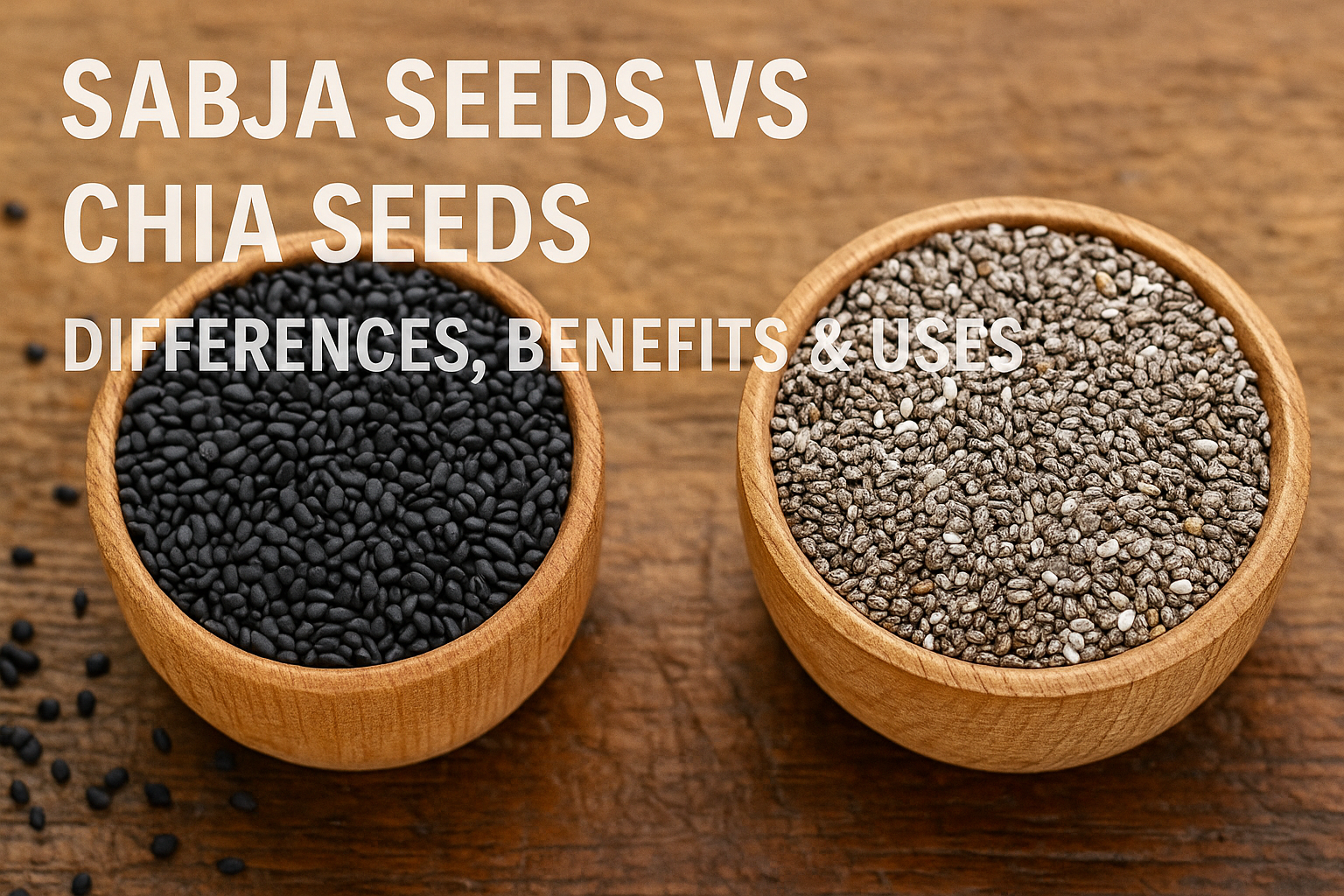
Superfoods have taken the wellness world by storm, and in India, two seeds often compared are sabja seeds vs chia seeds. While both are tiny, nutrient-dense, and look quite similar, they are not the same. In fact, their origins, nutrition, and health benefits differ in unique ways.
This detailed guide will help you understand the differences, clear the confusion around “is chia seed and sabja same”, and explain how to use both effectively in your daily diet.
Sabja Seeds and Chia Seeds Are Same? The Big Myth
Many people ask: “chia seeds and sabja seeds are same?” or “sabja seeds and chia seeds are same?” The answer is no. They look alike when soaked, but they come from completely different plants.
-
Sabja seeds come from Ocimum basilicum (sweet basil plant). In India, they are also called tukmaria or falooda seeds.
-
Chia seeds come from Salvia hispanica, a plant native to Mexico, widely popular in Western superfood culture.
So while they may look similar in size and gel-like texture after soaking, sabja seeds vs chia seeds offer different nutrient profiles and uses.
Key Differences: Sabja Seeds vs Chia Seeds
| Feature | Sabja Seeds | Chia Seeds |
|---|---|---|
| Plant Source | Sweet basil (Ocimum basilicum) | Salvia hispanica (mint family) |
| Appearance | Jet black, slightly larger | Black, white, or gray; smaller, oval |
| Soaking Time | Swell within 5 minutes | Take ~20–30 minutes to form gel |
| Taste | Mild, neutral with herbal notes | Neutral, slightly nutty |
| Calories (per 100g) | ~480 kcal | ~490 kcal |
| Protein | ~20g | ~17g |
| Fiber | ~40g | ~34g |
| Fat (Omega-3) | Low | High in ALA omega-3 |
| Common Use | Falooda, lemon water, traditional drinks | Smoothies, puddings, baking, salads |
Nutritional Profile: Which Is Healthier?
Sabja Seeds Nutrition
-
Protein: ~20g per 100g
-
Fiber: Excellent source for digestion and satiety
-
Vitamins: Rich in vitamin A, iron, calcium, magnesium
-
Special benefit: Natural body coolant, perfect for Indian summers
Chia Seeds Nutrition
-
Protein: ~17g per 100g
-
Fiber: Around 34g, helps in digestion and weight management
-
Omega-3 fatty acids: Rich in ALA, supports heart and brain health
-
Special benefit: Slow energy release, ideal for sustained energy
Verdict: Both are healthy. Sabja seeds have more protein and are great for cooling, while chia seeds have higher omega-3 and are better for long-term energy and heart health.
Health Benefits of Sabja Seeds
-
Cooling effect – Used in summer drinks like falooda and sherbets.
-
Digestive health – High fiber prevents constipation.
-
Weight loss – Swells quickly in water, creating fullness and reducing overeating.
-
Blood sugar regulation – Helps in slowing glucose absorption.
-
Skin health – Vitamin A and antioxidants promote healthy skin.
Health Benefits of Chia Seeds
-
Heart health – Omega-3 content reduces inflammation.
-
Bone strength – Rich in calcium, magnesium, and phosphorus.
-
Weight management – Fiber supports satiety and prevents snacking.
-
Energy booster – Slow-release carbs fuel workouts and endurance.
-
Digestive support – Gel-like fiber improves gut health.
Uses: How to Include Sabja & Chia in Your Diet
Sabja Seeds Uses
-
Traditional Indian drinks: falooda, rose sherbet, lemon water.
-
Smoothies and yogurt bowls.
-
Topping for fruit salads.
Chia Seeds Uses
-
Chia pudding with almond milk.
-
Smoothie thickener.
-
Egg substitute in vegan baking (1 tbsp chia + 3 tbsp water = 1 egg).
-
Topping on oats, cereal, or salads.
Which Is Better for Weight Loss?
-
Sabja seeds: Quick satiety, great for controlling cravings instantly.
-
Chia seeds: Sustained energy and fiber, prevents late-night hunger.
If your goal is quick appetite control, sabja works better. If you want long-term satiety and heart health, chia is your pick.
Sabja Seeds vs Chia Seeds in Ayurveda & Modern Science
-
Ayurveda: Sabja is valued as a cooling food, especially for Pitta dosha.
-
Modern science: Chia has been studied for cholesterol-lowering and heart-protective benefits.
Both align with holistic and modern health approaches, making them versatile for today’s diets.
Safety & Side Effects
-
Both seeds should be soaked before eating to avoid choking risks.
-
Excess sabja may cause bloating in sensitive individuals.
-
Chia seeds, if eaten dry, can expand in the throat—always soak first.
Practical Tip: Combine Both
Why choose one? Use sabja in your summer drinks and chia in your smoothies or puddings. This way, you get the best of both—cooling effects plus omega-3 benefits.
If you’re vegetarian, pairing these superfoods with High protein veg foods or exploring Indian vegetarian protein sources ensures a balanced nutrient-rich diet.
FAQs
1. Is chia seed and sabja same?
No, they come from different plants. Chia is from Salvia hispanica (mint family), while sabja is from sweet basil (Ocimum basilicum).
2. Which is better for weight loss—sabja or chia?
Sabja provides quick satiety, while chia offers sustained fullness. Both help, but chia may be better for long-term weight control.
3. How long should I soak sabja seeds?
Only 5–10 minutes. Unlike chia, which needs 20–30 minutes, sabja swells much faster.
4. Can I eat sabja and chia seeds together?
Yes. Combining both provides cooling benefits, protein, fiber, and omega-3 fatty acids.
5. Do sabja seeds have omega-3 like chia?
Sabja seeds have very little omega-3 compared to chia, which is one of the richest plant-based sources of ALA.
6. Can children eat sabja or chia seeds?
Yes, in moderation and always soaked. They’re safe for children above 5 years but should be introduced slowly.
Conclusion
The sabja seeds vs chia seeds debate isn’t about which is superior—it’s about what fits your goals. Sabja seeds are ideal for cooling, digestion, and quick satiety, while chia seeds shine for omega-3, bone health, and sustained energy.
The healthiest choice? Use both smartly in your diet. A morning chia pudding for energy and an evening sabja drink for cooling balance can make a perfect daily routine.